
Most enterprise agent pilots don’t fail in the demo. They stall a few weeks later, when the agent meets real invoices, real tickets and real exceptions. The usual reaction is to blame the model and look for a bigger one. In most cases that’s the wrong diagnosis. The model is rarely the thing holding the pilot back. The data around it is.
What the research keeps pointing to
A recent Collibra survey run by The Harris Poll found that seven in ten data, privacy and AI decision-makers say pilot roadblocks trace back to an unaligned or poor data foundation. The same survey found that more than half of respondents spend significant staff hours manually reviewing and correcting agent outputs before they go live.
Separate research from OutSystems, CIO Dive and KPMG tells a similar story from the orchestration side. About 35% of respondents named data consistency and context sharing as a major hurdle when getting agents to work together. Their conclusion: agents need governed enterprise data, application states and business processes to work from, not just generic model knowledge.
Why a strong model still fails on messy data
A capable model can reason well and still make the wrong call, because reasoning is only as good as what it can see. Three patterns show up again and again.
- Conflicting definitions. “Customer,” “active supplier” and “closed” mean different things in the ERP, the CRM and the finance system. The agent picks one, and the answer looks right until someone checks it.
- Missing context. An agent can see an invoice but not the purchase order, the contract terms or the approval policy that decides whether it should be paid.
- Uncontrolled access. Data is either locked away so the agent can’t reach what it needs, or exposed so widely that nobody can say what the agent used to reach a decision.
The hidden cost: your people become the cleanup crew
When data is inconsistent, the agent’s output needs checking. Someone reviews it, fixes it and sends it on. The pilot still “works,” but the savings quietly disappear into review time. This is also why pilots look good on twenty carefully chosen test cases and then fall apart on the messy long tail of real work: exceptions, duplicates, missing fields and records that disagree.
If your team spends more time correcting the agent than it used to spend doing the task, the problem usually isn’t reasoning. It’s inputs.
What a data-ready agent environment looks like
Data readiness doesn’t mean cleaning every table in the company before you start. It means giving agents a reliable path from source systems to action, with control at each step.
Each stage has a job. Connecting systems gets the agent to the data. Unifying it means the agent works from one agreed version of the facts. Governing access keeps the agent inside the lines and makes its decisions explainable. Grounding gives it the surrounding process context, such as policies, approvals and history. Only then does acting become safe enough to automate, with exceptions routed to people.
A checklist before you scale a pilot
- Trace the data. Pick one process and list every system, field and document the agent needs. Gaps here predict where it will fail.
- Agree on definitions. Settle the handful of terms that drive decisions, and write them down where the agent can use them.
- Use governed connections, not exports. Spreadsheets pulled last Tuesday go stale. Live, permissioned access keeps agents current.
- Test on messy cases. Include duplicates, missing fields, conflicting records and edge cases, not only clean examples.
- Track the correction rate. Measure how often people have to fix agent output. It’s the clearest signal of data quality.
- Log what the agent used. For every decision, record which data and which rules it relied on, so you can audit and improve.
A quick test: if a new employee couldn’t do the task from the same data, permissions and documents you’ve given the agent, the agent probably can’t either.
Where a unified platform helps
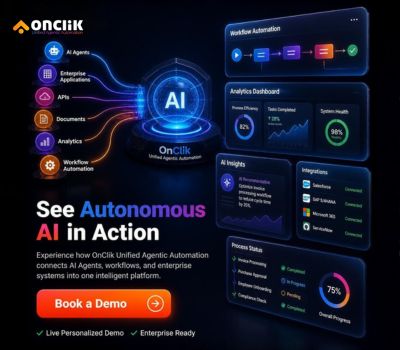
Many pilots stall because each agent is wired to its own data, rules and logging. Context is rebuilt every time, and no two agents see the same version of events. A unified approach changes that. OnClik brings specialist agents, visual processflow orchestration and enterprise governance onto one platform, with connections into systems such as SAP, Microsoft, Salesforce, ServiceNow and Workday. Agents share governed context instead of each fending for itself, and monitoring and audit sit across all of them.
The result is fewer surprises in production, less manual cleanup and a clearer path from a successful pilot to something the business relies on.
The bottom line
Models will keep improving, and swapping one for another is usually the easy part. The harder, more valuable work is making sure agents see accurate, consistent, well-governed information. Fix that first, and many “stalled” pilots start moving again without changing the model at all.